What is C. elegans?
C. elegans is a nematode, about 1 mm in length. They are inexpensive to maintain and can be grown in vast quantities in the lab. Today this nematode is the world’s best understood animal. The genome has been mapped and sequenced. They have many tissues and organs that are present in higher organisms, such as the nervous system, digestive tract, motor (muscles), and reproductive system. These tissues and organs can be easily monitored in vivo, using optical methods, because they are transparent throughout their short life cycle (<3 weeks). They also exhibit behaviours that are modulated by their environment as well as experience. It has since proven to be exquisitely sensitive to its environment, displaying remarkable behavioural plasticity.
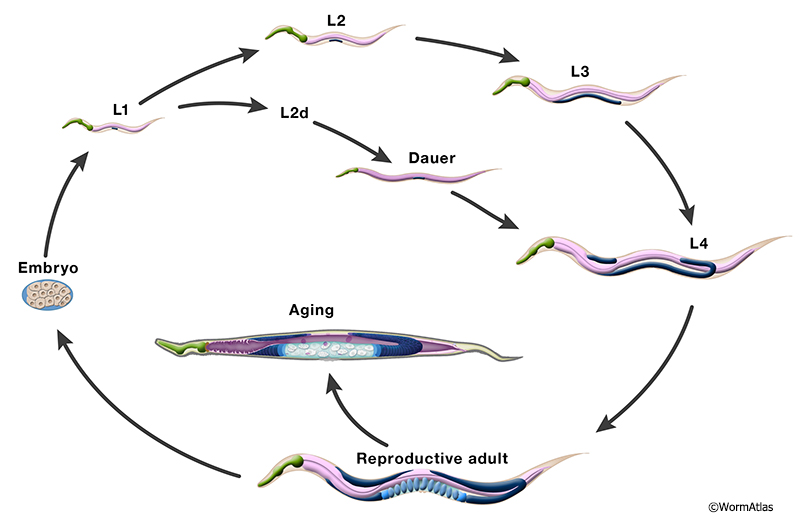
Due to these characteristics, C. elegans has emerged as one of the premiere model systems in many research fields, including aging, neurobiology and even rudimentary forms of learning. The ease with which C. elegans can be grown, manipulated and observed has driven research into new areas and ‘the worm’ has been a silent collaborator in three Nobel prizes, and thousands of research articles over the last years. Future developments in optical methods will continue to enrich our knowledge and understanding of how biological pathways orchestrate development, learning, memory, behaviour and aging.