Multiview patent
Multiview V1
Specialized tasks, such as meticulous nematode counting, precise manipulations for Petri dish changes, and detailed tracking for motility studies, are routinely required in C. elegans experimentation, where the expertise of skilled specialists is paramount.
The Automatics and Industrial Informatics Research Institute (ai2 at UPV), has developed a prototype in collaboration with Biopolis S.L. and IIS-LaFe as part of the Smartfoods CIEN and CONOCE projects, which automates certain tasks and enables comprehensive experimentation under diverse conditions for various models (Fig. 1).
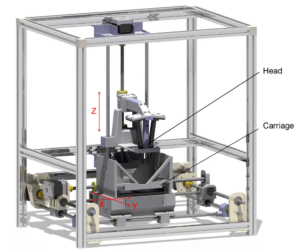
Figure 1: First prototype (CONOCE project)
The first prototype was continually refined, incorporating emerging experimentation techniques and embracing cutting-edge technologies. Notably, its compact design, akin to a laboratory microscope, enables it to operate within a climate-controlled chamber, precisely regulating light and temperature conditions.
This prototype features two dedicated inspection zones for macro-inspection and micro-inspection. Both zones are equipped with a stereo camera configuration. This device can accommodate multiple Petri dishes, enabling the execution of comprehensive experiments. Moreover, it autonomously manages dish handling, eliminating the need for manual intervention. Additionally, the prototype incorporates a precision pick, similar to those used by specialists, allowing for delicate handling of individual nematodes.
Multiview V2
The prototype has been significantly refined, featuring a more streamlined mechanical structure and an optimized image acquisition system that boosts overall performance (Fig. 2). This prototype allows the automation of lifespan, healthspan, chemotaxis, polyQ aggregate counting, and other assays.
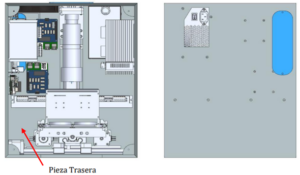
Figure 2: Second Prototype
The Automatics and Industrial Informatics Research Institute (ai2 at UPV), has developed a prototype in collaboration with Biopolis S.L. and IIS-LaFe as part of the Healthspan+ project, to make several significant improvements and turn the prototype into a real product.
Now some results performed at the Avicemis lab using the transfer in order to differentiate strains of C. elegans checking its trajectories are shown below (Fig. 3.)
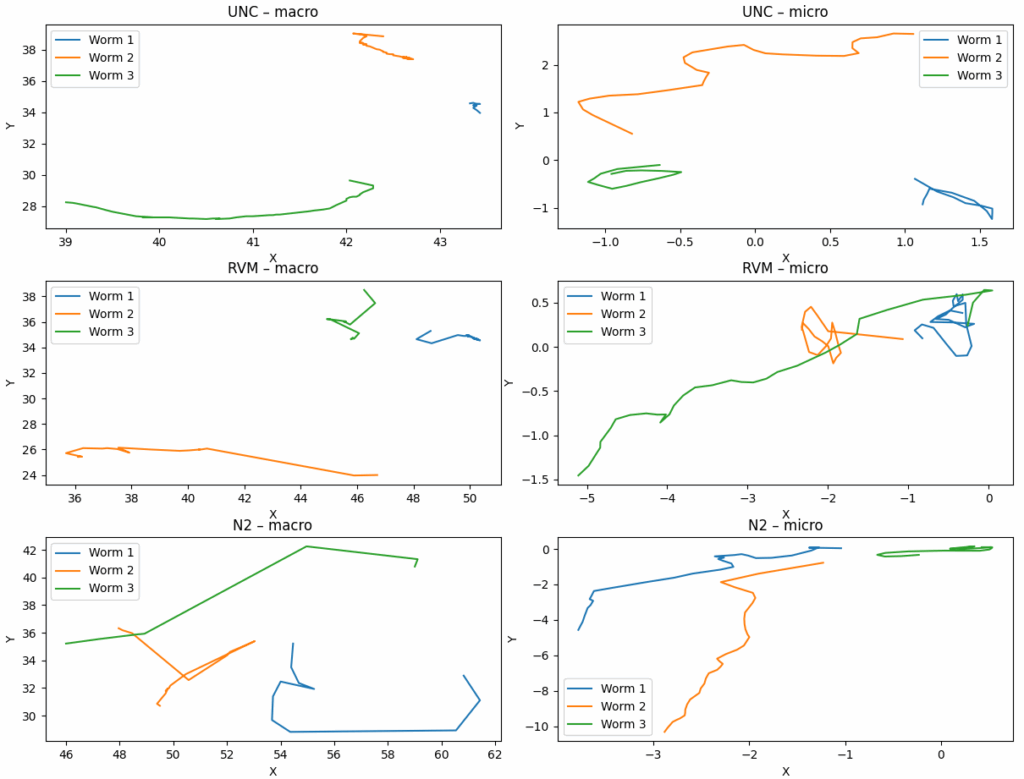
Fig. 3. -Examples of centroid trajectories of C. elegan from each strain
captured with macro (left) and micro (right) cameras.