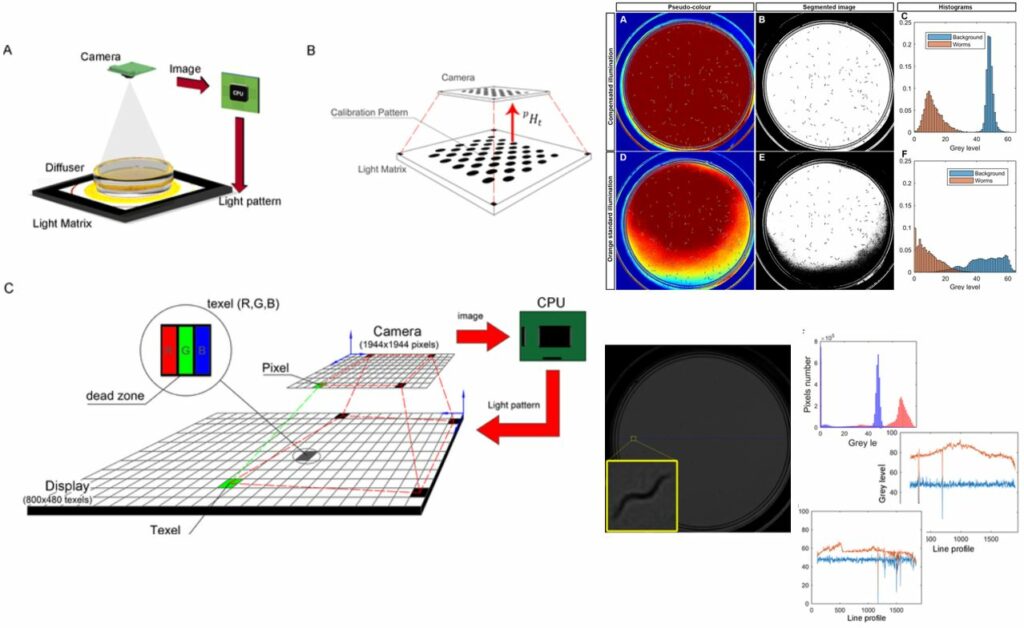
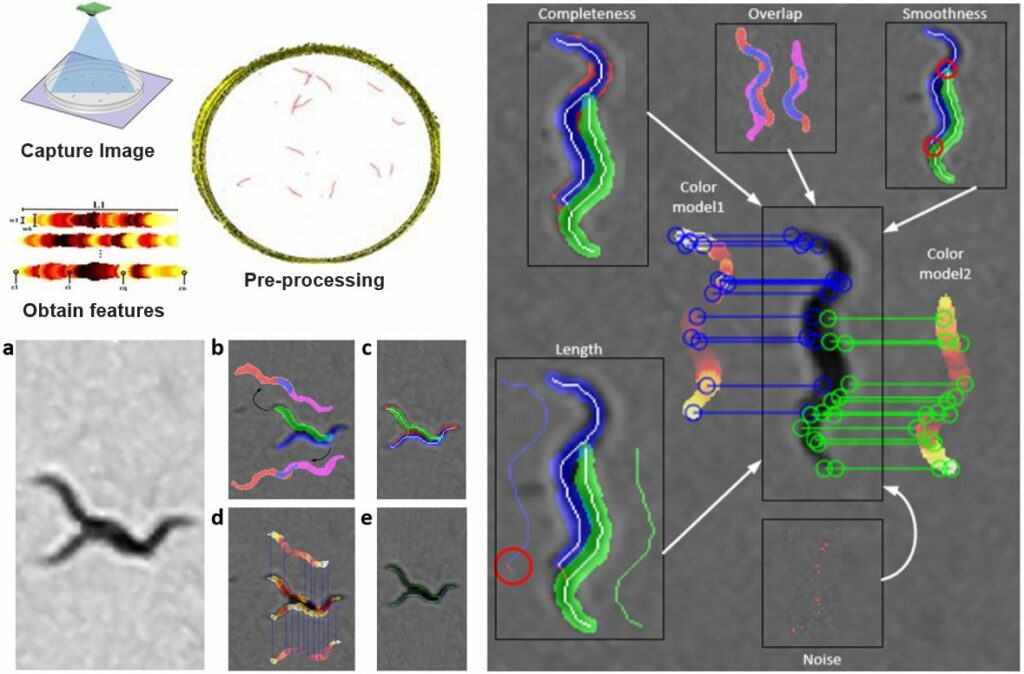
A monitoring system that integrates all the techniques developed at the mesoscale level was developed. In addition it was validated the feasibility of the machine for lifespan and memory experiments by comparing them with manual assays [1].
An active lighting technique has been designed, implemented and evaluated to improve segmentation results and control the light stimuli received by the nematodes [2].
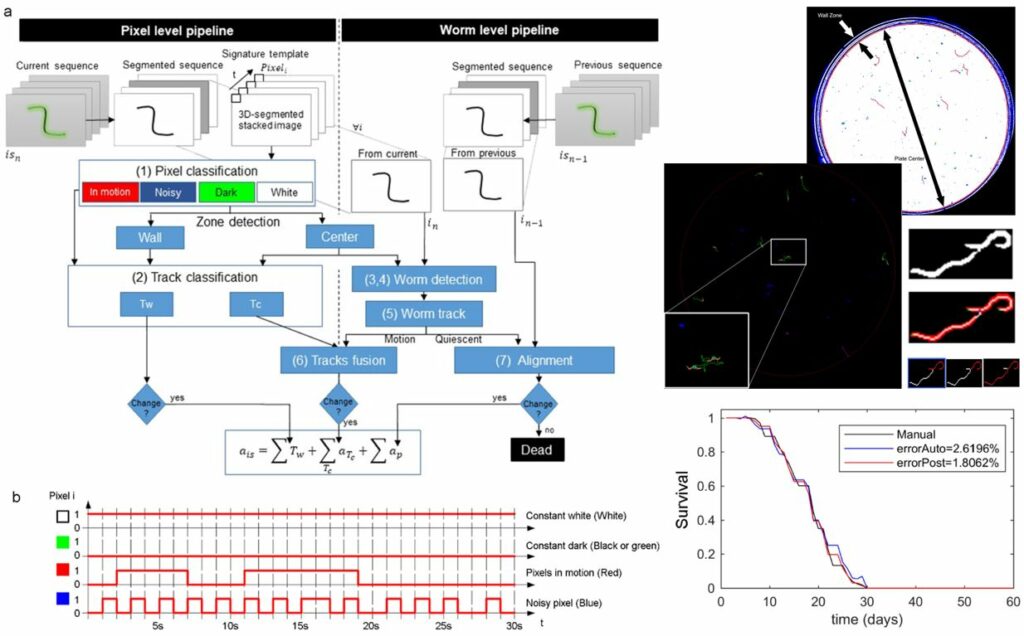
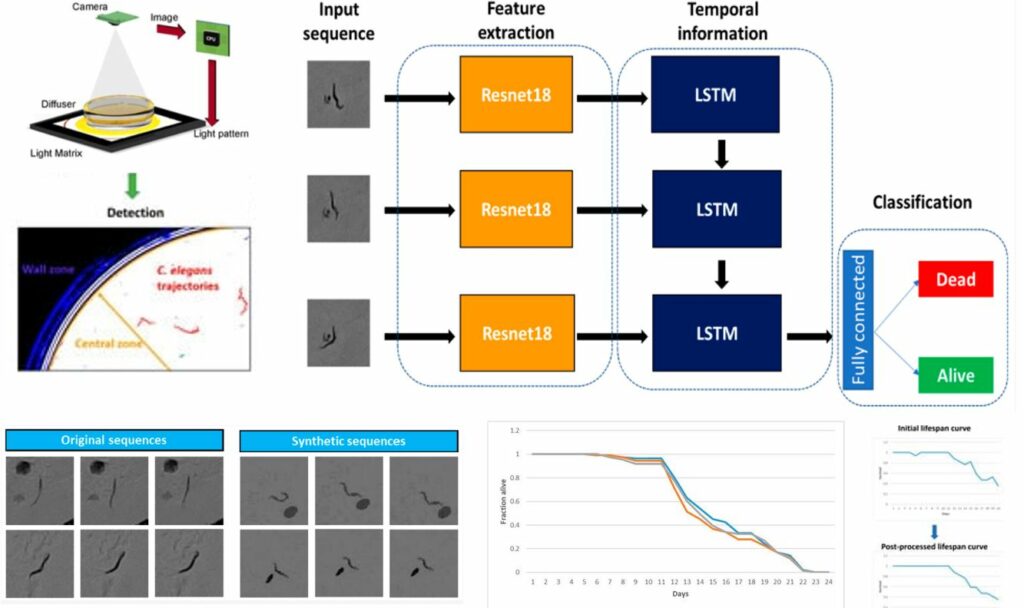
A method for automating the lifespan assay based on traditional computer vision techniques was developed and validated [3] .
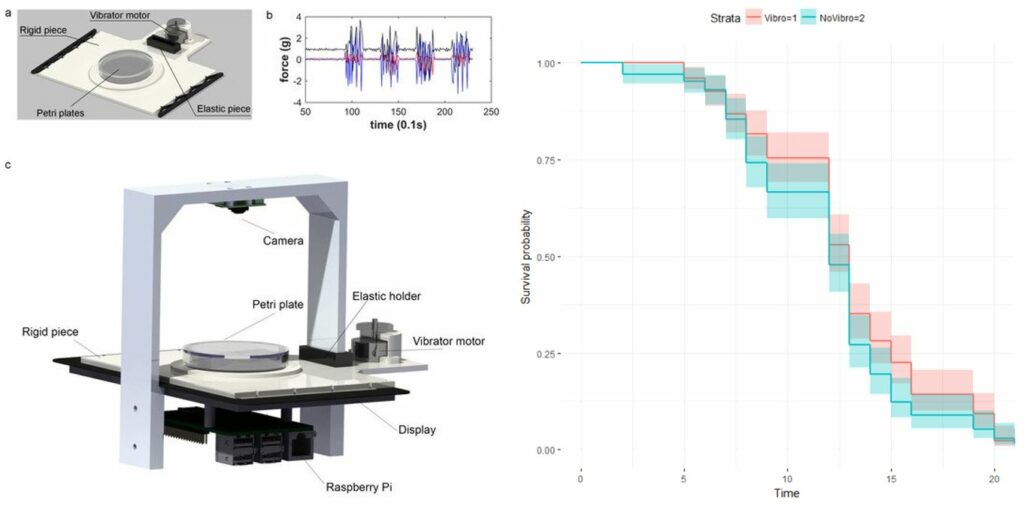
It has been achieved to apply mechanical vibration stimuli to nematodes allowing to improve automatic lifespan assays and to automate memory experiments by adding chemical stimuli [4].
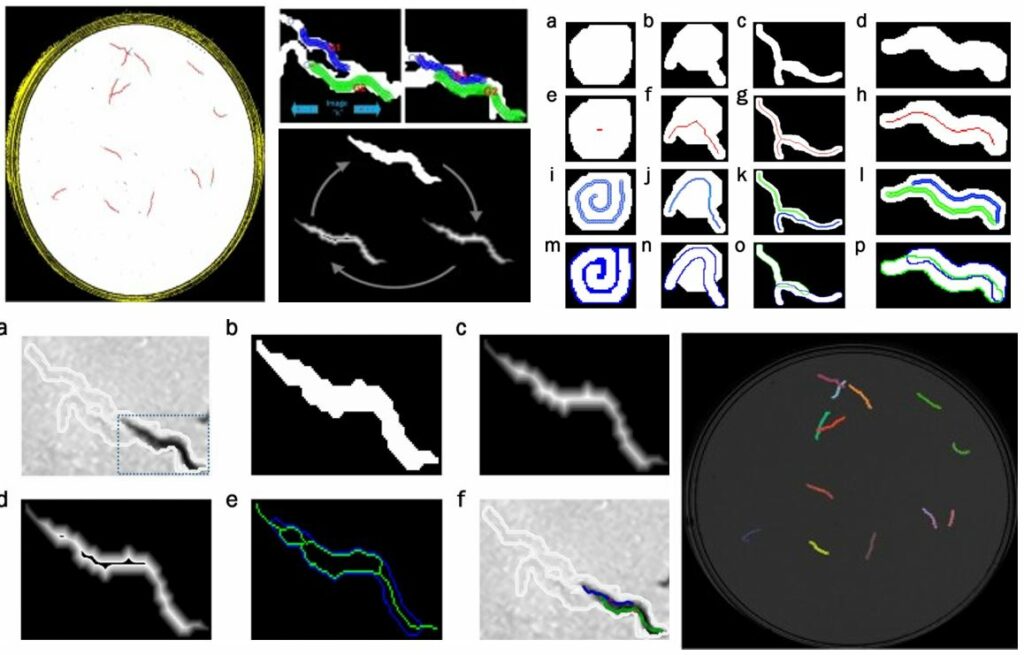
Advanced algorithms for posture tracking and re-identification of C. elegans from image sequences captured by the active systems were designed, developed and evaluated [5, 6].
Neural network models combining CNNs together with RNNs have also been used to solve live/dead event detection [7].
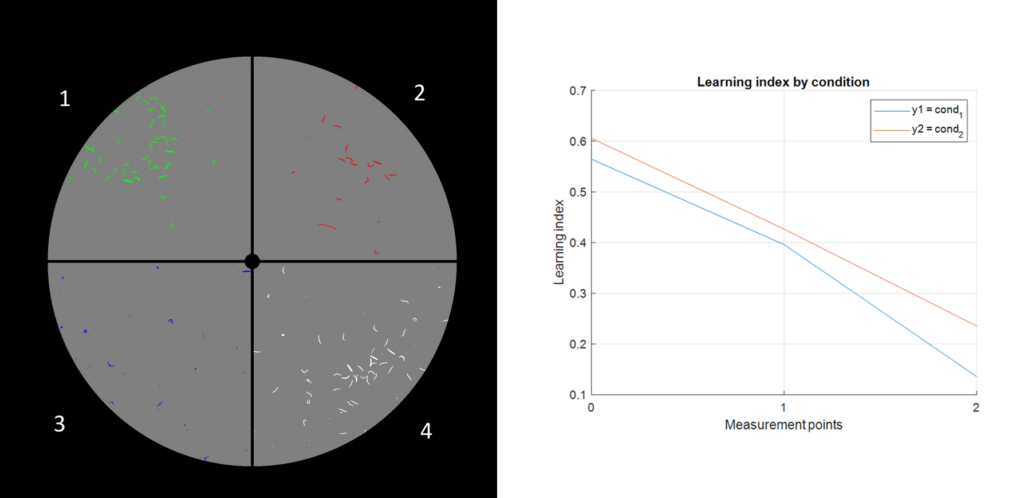
A memory assay has been validated in which a chemical is added to the quadrants where C. elegans feed (1 and 4). Initially, a training phase is performed where they learn to associate the presence of a chemical with food. However, this learning is lost over time.